Press Release: Cobrapost Exclusive
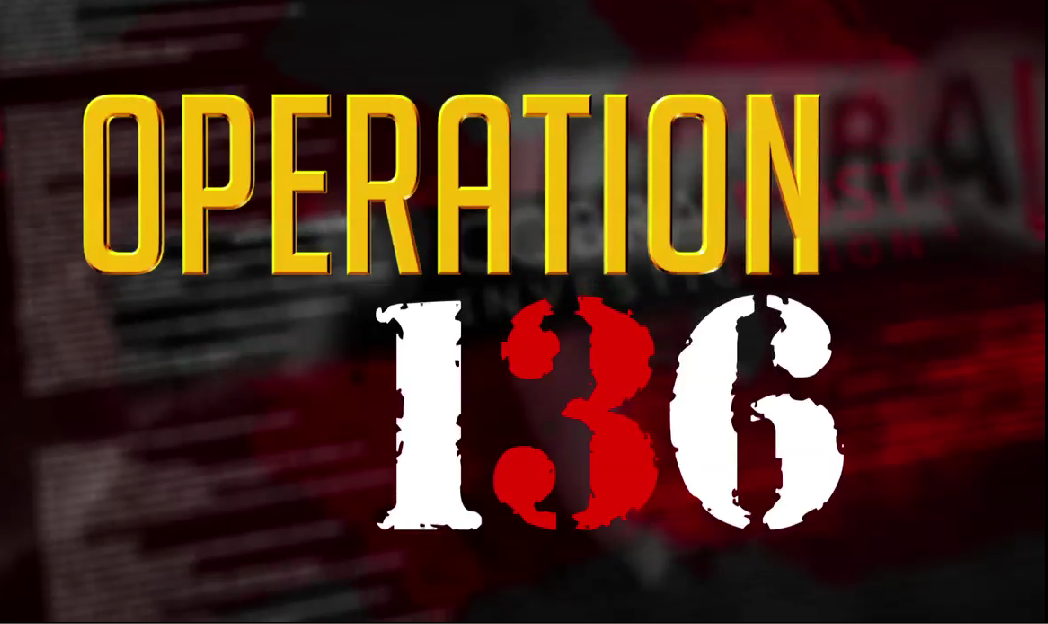
New Delhi: A major investigation by Cobrapost, spanning several months, shows many Indian media houses, some marquee names among them, ready to peddle Hindutva in order to polarize the electorate for electoral gains, malign political leaders, even from the party in power, rake muck on most celebrated and respected members of legal fraternity and civil society, show even judiciary in poor light and brand agitating farmers across the country as Maoists, all for money, as part of a malicious media campaign that a fictitious client proposed them to do on behalf of an equally fictitious organization.
Codenamed Operation 136, this investigation was undertaken by senior journalist Pushp Sharma and establishes Indian media’s propensity to run content irrespective of its nature to soar up their bottom lines. Using an alias, Acharya Atal, Sharma met owners or personnel of more than three dozen media houses who are in decision-making positions. Offering them anything between Rs. 6 crore and Rs. 50 crore if they agreed to provide a platform to his media campaign, Sharma made his agenda explicit to them:
- In the initial phase, the first three months, promote Hindutva through customized religious programmes to create a congenial atmosphere.
- Then, the campaign will be geared up to mobilize the electorate on communal lines by promoting speeches of Hindutva hardliners, the likes of Vinay Katiyar, Uma Bharti, Mohan Bhagwat and others.
- As elections approach, the campaign will target opposition leaders, namely, Rahul Gandhi, Mayawati and Akhilesh Yadav, caricaturing them using less than dignified language like Pappu, Bua and Babua, respectively, for them, in order to show them in poor light before the electorate.
- They will have to run this campaign on all platforms available with them – print, electronic, radio or digital including, e-news portals, web sites and social media such as Facebook and Twitter.
Shockingly, almost all media houses showed their eagerness to undertake such a diabolical media campaign. Here is a gist of interactions that Sharma had with them:
- They agreed to promote Hindutva in the garb of spiritualism and religious discourse.
- They agreed to publish content/advertorials with potential to polarize the electorate along communal lines.
- They concurred to besmirch or thrash political rivals of the party in power by posting or publishing defamatory content about them.
- Many of them were ready to accept cash, which in other words is black money, for the job to be assigned to them.
- Some of the owners or important functionaries, who the reporter interacted with, admitted that they were either associated with the RSS or they were pro-Hindutva and would thus be happy to work on the campaign.
- Some of them agreed to plant stories in favour of the party in power in their publications.
- Many of them agreed to develop and carry advertorials especially for this purpose.
- Almost all agreed to run this campaign on their platforms – print, electronic or digital in its various avatars such as e-news portal, e-paper or social media such as Facebook and Twitter.
- Some of them offered to do a complete media management to plant stories favouring the party in power in other publications with help from journalists other than their own organizations.
- Some of them even agreed to run down Union ministers Arun Jaitley, Manoj Sinha, Jayant Sinha, Maneka Gandhi and her son Varun Gandhi.
- Some of them also agreed to run stories against leaders of BJP alliance partners, like Anupriya Patel, Om Prakash Rajbhar and Upendra Kushwaha
- Some of them also agreed to defame the most noted and celebrated among the legal tribe and civil society like Prashant Bhushan, Dushyant Dave, Kamini Jaiswal and Indira Jai Singh.
- Some of them even agreed to paint agitating farmers as Maoists in their stories.
- Many of them agreed to create and promote such content as would aim for the “character assassination” of leaders like Rahul Gandhi.
First, the proposition itself is potentially violative of various sections of the Indian Penal Code, which hold publication of content of communal and defamatory nature a criminal act punishable by imprisonment. Then, all acts the media personnel agreed to undertake for money violate the Representation of the People Act 1951, the Conduct of Election Rules 1961 framed by the Election Commission of India, Companies Act 1956, the Income Tax Act 1961, and Consumer Protection Act 1986 and Cable Television Network Rules 1994 which together forbid deceptive or misleading advertisements, among other laws. These acts also violate the Norms and Journalistic Conduct of the Press Council of India, a quasi-judicial statutory body that was set up in 1978 by an Act of Parliament.
Although one may argue that such violations are hypothetical, yet given Indian media’s penchant for twisting facts or serving pure rumours as news especially during civil strife to foment communal sentiments – the Kasganj episode is a clear case in point in recent times – pleasing political masters of the day and tweaking news in favour of corporate interests, how dangerous it is for Indian democracy is obvious.
Sharma adopted malleable identities which he used according to the situation at hand. He first used his association with an Ujjain-based ashram, claiming himself to have been schooled at Jhunjhunu, Rajasthan, to have been to IIT Delhi and IIM Bangalore, settled in Australia and running his e-gaming company out of Scotland. Sometimes, he claimed to be head of Madhya Pradesh unit of Om Prakash Rajbhar’s outfit Suheldev Bharatiya Samaj Party, charged with party affairs in Karnataka, Maharashtra and the Northeast. In fact, Rajbhar has appointed Sharma in-charge of his party’s state unit for a consideration of Rs. 50,000 which he accepted on camera while making very damaging confessions of how various BJP ministers of the Yogi government coordinate their not-so-honest activities from his office. We are not reproducing that report here as it would deflect this story. At times, Sharma used all his assumed identities in a single meeting. As the investigation evolved to take a pan-India character he assumed the identity of a representative of a fictitious religious organization Shrimad Bhagvad Gita Prachar Samiti, purportedly on a mission, a gupt vyavastha (secret arrangement), at the behest of the “Sangathan” to bolster the prospects of the party in power in coming elections. As samples of the media campaign that he wanted to launch using their platforms, Sharma sometimes played before them some evocative jingles, caricaturing Rahul Gandhi, to set the tone of his interviews. Shockingly, these jingles were conceptualized and developed by the creative teams of some FM radio stations.
Interestingly, a few days before the release of this story, Pushp Sharma called up some of the media houses to ask them some more favours which were as whacky as they were outrageous. Of course, as part of his media campaign, he asked them to publish or air stories not only against Union ministers Arun Jaitly, Manoj Sinha, Jayant Sinha, Maneka Gandhi and her son Varun Gandhi but also against BJP alliance partners, in order to run them down. He also asked them to plant such stories as would link agitating farmers across the country with Maoists. He then asked them to rake muck on legal luminaries who have always fought for civil liberties and rights, and thus have always been an eyesore for the establishment, such as the likes of Prashant Bhushan, Dushyant Dave, Kamini Jaiswal and Indira Jai Singh. Finally, he demanded to paint the judiciary in such colour as would make their judgments controversial or questionable in the eyes of the people.
In the first part of Operation 136, we reproduce the excerpts of interactions that Sharma had with India TV, Dainik Jagaran, Hindi Khabar, SAB TV, DNA (Daily News and Analysis), Amar Ujala, UNI, 9X Tashan, Samachar Plus, HNN 24 ´ 7, Punjab Kesari, Swatantra Bharat, ScoopWhoop, Rediff.com, IndiaWatch, Aj and Sadhna Prime News.
It will be informative and enlightening to reproduce some gems from interactions that the senior journalist had with these media houses.
- Jitender Kumar, Deputy Vice President (Sales), India TV, Noida says on how his channel suppresses or runs a story: “Aadhar ke favour mein toh hum campaign chala rahe hain agar aapne dekha hoga toh dekha na bahut barhiya hum campaign chala rahe hain prime time par … wo toh chal hee raha hai Acharya Ji … jaise aap keh rahe hain UP wali baat wo jismein haare the seats toh humne jo UP Samvad kiya than a wo uske baad hum logon ne on air hee nahi kiya kyonki accha nahi lagta na unhone bola tha Yogi ji ne ki hum log jeetenge seeton par sab toh isliye hum logon ne wo mellow down kar diya dikhaya hee nahi channel pe zyada (If you have seen we already running a campaign in favour of the Aadhar … oh you saw it. We are running a good campaign in prime time … That is already running Acharya Ji … As you said that you have lost seats, we had done a programme UP Samvad after the elections. But we did not put that on air because we did not feel good about this defeat, especially when Yogi Ji had claimed that they will win all seats. So, we mellowed it down and we did not run it much on our channel).”
On how his boss Rajat Sharma functions in such deals: As they have already promised a meeting with their owner, Rajat Sharma, Jitender again says: “Sir wo directly kabhi nahi kahenge wo kahenge hum aapke saath hain bas (Sir, he will not discuss anything directly.
When the journalist seeks reconfirmation if his Hindutva agenda will be run on India TV. Sudipto Chowdhuri, Executive President (Sales) is prompt to say: “Promote karenge na humne ye kiya promote kiya (Yes, we will promote it. This is what we will promote).”
On how he got the go-ahead from Ritu Dhawan, wife of Rajat Sharma and co-owner of the channel, to clinch the deal “Isiliye kal jab humari baat ho rahi thi hum logon se phone par aapse baat kiya hum logon ne socha dekho aap itne busy ho aap Guwahati, Kolkata ya fir Nagpur jaoge jo bhi aise hum expect karnenge mail bhej ke apna aaram se baithe rahenge toh wo initiative nahi hota hai let us take initiative aur ussi waqt humne baithe ke apne paise se ticket karai boss ko mail likh diya ki boss okay … jo bhi likha parhi wala kaam hai na kagaz wala she said okay (So, when I spoke to you over phone yesterday, I thought you are a very busy person. You were to go to Guwahati, Kolkata and Nagpur. In this case as it is expected I could have shot a mail to you. Now this is not an initiative. Let us take initiative and then and there I bought a ticket and shot a mail to my boss … all the documentation work. She said okay).”
- Sanjay Pratap Singh, Area Manager (Bihar, Jharkhand and Orissa), Dainik Jagaran. On lending support in terms of paid news: “Haan hum kar denge aap nishchint rahiye. Hum aapko Bengal ka bhi yahin se release kar denge … theek hai. Toh usase kya hoga? Hum jo aapko bolenge wo wahan par log likh ke article bhi de denge hum aapko time to time news bhi dete rahenge (Yes, we will support you, don’t worry. I will release your ad from here itself … okay. What will happen? If you tell us they will write and publish articles for you. We will also publish your news from time to time).”
On helping the journalist with secret agenda: “Kuchh toh stringers jayenge jo hidden agenda pe kaam karenge jo news nikalenge. Toh humara bhi aadmi dekhiye internally bhi ek layer lekar ke daudta rah editorial ko usko manage karta hai … koi bhi aadmi iss stage par bina vested interest ke … (Some stingers will go there who will work on that hidden agenda to dig out news. So, some will be internally working on another layer to manage editorial … nobody at this stage does work without vested interest).”
- Kailashnath Adhikari, Managing Director, Shri Adhikari Brothers Television Network, Mumbai, while agreeing to run the agenda: “Nahin nahi aapko poora agenda end tak le jayenge (no, no we will take your agenda till the end).”
- Rajat Kumar, Chief Revenue Officer, Zee Synergy and DNA, upon agreeing to run the agenda in DNA: “Bilkul main ismein bahut yuddh gati se kaam karta hoon (Sure, I will work on it on a war footing).”
- Atul Aggarwal, Director and Editor-in-Chief, Hindi Khabar, Noida, while agreeing for the character assassination of Varun Gandhi: “ Maza aa jayega, Guruji maza aa jayega thok dalenge … ko (Yes. It will be great fun. It will be great fun Guruji. We will fix …).”
- Pradeep Guha, CEO, 9X Media, Gurgaon, when asked if they were comfortable with what had been proposed to them: “We have no objection. We will carry whatever …”
- Amit Tyagi, Sr. Sales Head, Samachar Plus, Noida, when asked if they can accept 60 percent payment in cash for the deal: “Ek baar check bhi karna padega usko check kara ke main baat karta hoon ki wo 60:40 pe agree hain 50:50 pe agree hain wo ek baar mujhe check karna padega shashank ji se aur Umesh ji se (Let me check it with my colleagues Shashank and Umesh and see if they agree on 60:40 or on 50:50).”
- Amit Sharma, CEO, HNN Live 24×7, Dehradun, Uttarakhand, on his willingness to run a campaign against the judiciary in case it passes unfavourable order in certain cases: “Usse controversial kar diya jaye. That can be possible (That can be made controversial. That can be possible).”
- Sunil Sharma, Punjab Kesari, when asked if they can stop or dilute a story: “Par normal see jaisi aati hai wo main karwa sakta hoon … wo karwa doonga wo koi diqqat nahi hai (But I can fix normal stories … that I can do. There is no problem).”
- Sanjay Singh Srivastav, Editor and Business Head, Swatantra Bharat, Lucknow: “Haan ismein koi if and but nahi rahega commitment hundred percent koi kahin diqqat nahi balki koshish ye rahegi ki jitna hum aapse kahe jab dein to zyada ho (Yes, there will be no ifs and buts. There will be 100 percent commitment [on our part], there is no problem at all. Rather, when we deliver it will be more than what we promise).”
- Satvik, CEO, ScoopWhoop, Delhi: “If you are doing in smart way … har cheej mumkin ho sakta hai (If you are doing in smart way … everything is possible).”
- Viraj Khandhadia, Associate Director Ad Sales, Rediff.Com, Mumbai. What he suggests is self-explanatory: “Sir aur ke baat aur bataiye agar hum ye ek tareeqe kee baat hai. Humari side se aapke liye story likhein script likhein wo neta ji ko chhod ke wo territory Karnataka rahega toh Karnataka ke liye, UP, Bihar jahan ke liye bhi … (Sir, what you are telling me is one thing. What if we write good stories or scripts for you, not on politicians, for whichever territory you may like, be it Karnataka, UP or Bihar)?”
- Harinder Singh Sahni, Business Head/Branch Head, Aj (Hindi Daily), Lucknow: Sahni declares why he is in the news business: “Maine bola tha ki main seedha sa dhanda karna chahta hoon mujhe milta rahega aur main karta rahoonga (I told you that I am here for making business. As long as I get it, I will be doing [what you ask for]).”
- Alok Bhatt, Director, Sadhna Prime News, Lucknow: “Aur jo hai hum se jitna aggressively karaana hai wo bataiye kyonki hum toh ussi ke liye hain hee matlab hum khule taur par chalne wale aadmi hain (Tell me how aggressively you want us to run your campaign because we are here only for that cause. We are the ones who do it openly).”
On running down the BJP leaders and its alliance partners: “Ji ji bahut accha bahut accha … aapka jaisa aadehsh hoga paalan hoga (Yes, yes. Very good, Very good … We will do as you wish).”
On resorting to the character assassination Prashant Bhushan, Kamini Jaiswal and Indira Jai Singh: “Bilkul, bilkul. Aap humein bas thoda input de dijiye hum cheejein taiyar karwa lenge. Humari apni SIT hoti hai hum usko aur develop kar lenge aapne jo bataya hai wo bhi baaki hum usko aur explore karte hain (Sure, sure. You give us some input [on them]. We will make stories. We have our own SIT (Special Investigative Team). So, we will develop the stories. What you tell us [in that input] we explore more with its [SIT] help).”
It is this nationalism that Reporters Sans Frontières (RSF) has brought into question while placing India at 136 on its 2017 World Press Freedom Index (https://rsf.org/en/ranking#). RSF is a Paris-based independent body which works with 18 journalists’ organizations from as many countries and promotes and defends the freedom of press and information. The three-decade-old body enjoys a consultant status with the UNO.
Operation 136 derives its name from the RSF ranking only.
Last week when a huge breach of Facebook data was reported, Union Minister of Law and Justice and Information and Technology Ravi Shankar Prasad had tweeted: “Any covert or overt attempt to misuse Social Media including Facebook to influence India’s electoral process through undesirable means will neither be tolerated, nor be permitted.”
This is exactly what Operation 136 establishes beyond doubt: Indian media houses do have the propensity to “influence India’s electoral process through undesirable means.” Now the larger question is: Would the minister or, for that matter, his government move to act decisively to stem the rot that has become the hallmark of Indian media, of late, and help restore its credibility.
In the course of the investigation, names of certain individuals and organizations cropped up which was purely incidental and was essential to bring to the fore the truth and as a result the story in all its shady aspects.
Aniruddha Bahal
Editor,
Cobrapost.com
For more details log on to:
www.cobrapost.com
If you like the story and if you wish more such stories, support our effort Make a donation.
Trending News
Fri Mar 27 2026 | By Newsdesk
Fri Mar 27 2026 | By Newsdesk
Fri Mar 27 2026 | By Newsdesk

Fri Mar 27 2026 | By Newsdesk

Fri Mar 27 2026 | By Newsdesk